PR Courses in Ukraine in 2026: A Complete Guide to Choosing the Right Program
The PR industry has changed dramatically in 2026. Social media has become one of the key sources of information, 66% of professionals use generative AI to create content, and reputational risks for businesses have increased significantly.
These and other factors are shaping a new set of requirements for PR professionals in Ukraine. Skills that did not exist a few years ago are now becoming essential. While the level of digital skills among Ukrainians has reached 58% (basic level and above), effective PR now requires much deeper and more specialized expertise.
That is why quality PR and communications education in 2026 needs to do more than simply acknowledge this changing landscape. It needs to address it systematically and equip professionals to work within it.
We analyzed the market to understand what PR courses are available, how much they cost, and what to look for when choosing a program. This guide will help you make an informed decision, whether you are looking to enter the profession, strengthen your team, or build a systematic approach to protecting a brand from reputational crises.
What Types of PR Courses Are Available in Ukraine in 2026?
There are dozens of PR education programs available in Ukraine, from short online intensives to comprehensive academic courses. On the one hand, that is a good thing: there are plenty of options to choose from. On the other, without clear selection criteria, it is easy to end up buying a pig in a poke and spending time on a program that delivers little real value.
What Does the Market Offer Today?
Academies and Business Schools
Who: KSD (Kyiv School of Development), kmbs (Kyiv-Mohyla Business School), UCU (Ukrainian Catholic University), KAMA (Kyiv Academy of Media Arts), and others.
These are the heavyweights for those building a long-term career. Their programs focus on strategic communications, crisis management, and corporate case studies. They typically run for three to six months, often include mentoring, and provide certificates upon completion.
Drawbacks: High cost and significant time commitment. These programs run for months and require a high level of engagement. An academic approach can also sometimes struggle to keep pace with rapidly changing tools, particularly in areas such as social media and AI.
Online Platforms
Who: Skvot, Bazilik, Prometheus, Edera, Coursera, Diia.Education, and others.
These platforms offer flexible courses with video lessons, assignments, and access to recordings for periods ranging from one month to one year, and in some cases indefinitely. They work well both for beginners in communications and for professionals looking to develop their skills.
Drawbacks: Without live interaction and accountability, many people drop out halfway through. Feedback on assignments is often limited or provided by course coordinators rather than the lecturers themselves.
Intensives
Who: LABA, the Instapreneurs, Projector.
A short, highly concentrated format lasting one to four weeks, usually with live sessions or webinars. The main strengths are focus and speed.
Drawback: There is little time to absorb and practice the material.
Agency-Led Courses
Training delivered by practitioners who work on real PR projects for real clients every day. Maximum practical experience, minimum theory for theory’s sake. This is where participants can build actual case studies and portfolios.
Drawbacks: Agencies often teach according to their own approaches and the specific needs of their clients. If you are looking for an academic foundation or a state-recognized degree, this format may not be the right fit.
What Does u.comms Offer?
Yes, we teach too. And judging by the feedback and results from our “students,” we do it well.
One of our programs for communications professionals is PR Compass. It runs for 1.5 months and focuses on the hard skills you can immediately apply in your work. Participants also have the opportunity to practice these tools on real cases from the agency’s experience.
This makes the program one of the most practice-oriented options available in 2026.
Which PR Courses Are the Most Popular in Kyiv and Have the Best Reviews?
Practical training, real-world cases, a focus on strategy and crisis communications, and the opportunity to put these skills to the test are what tend to receive the strongest feedback from participants. If a course offers this kind of hands-on experience, it is worth considering.
Among the active players on the market in 2026 are Projector Institute, the S. Nyzhnyi Kyiv School of Public Administration, LABA, programs offered by established agencies, as well as relatively new offerings that have already gained recognition from audiences in the communications and PR sector.
Reviews are a useful reference point, but it is important to look beyond the “star rating” and focus on specifics: what participants actually gained, what jobs they landed, and what cases they were able to develop and present.



PR Compass
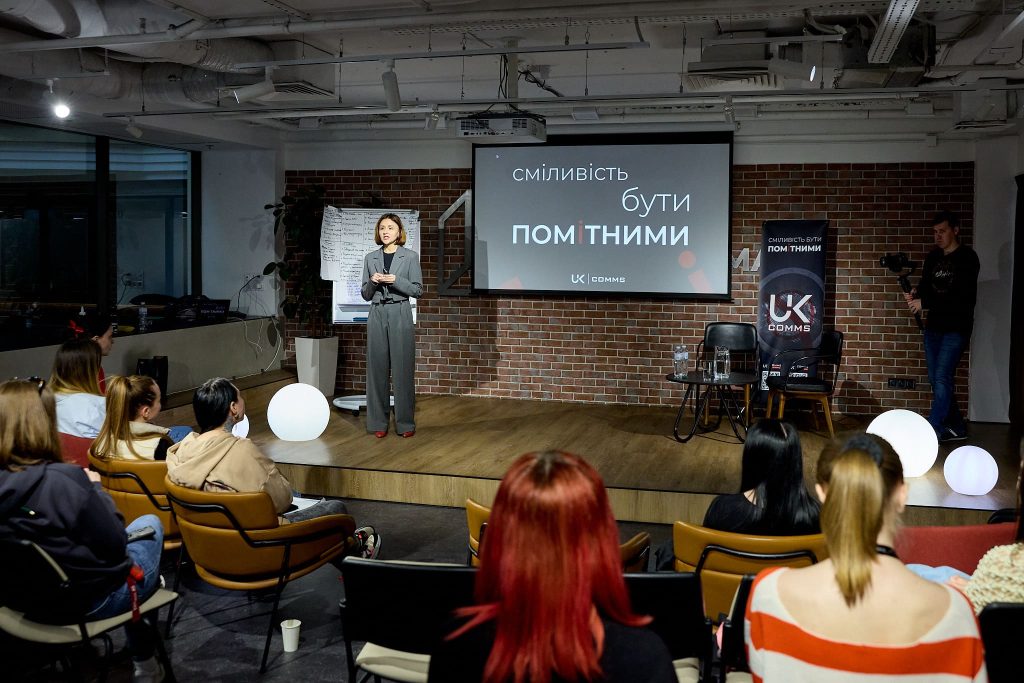
PR Compass by u.comms academy is a course created by the team at u.comms communications agency. More than 60 graduates from two cohorts have highlighted its practical focus: each module is built around real-world tasks rather than abstract theory.
Here is what some of our graduates had to say about the course:
- “Thanks to the course, I learned to better understand the needs and expectations of my clients and colleagues, and was able to improve the quality of my communication and interaction with them.”
- “The course gave me the push to continue my professional growth and even helped me find a job in the capital.”
- “I would especially highlight the community. Our cohort developed a friendly and interesting community. Interaction, communication, sharing cases and job opportunities was another great benefit.”
How Much Does a PR Course Cost?
PR and communications education in Ukraine in 2026 covers a wide price range, starting at UAH 500 for a single lecture. The cost of a full course depends on its duration, level, the school’s reputation, and what is included in the package.
Approximate prices:
- UAH 6,000–12,000: short intensives, 2–5 sessions, basic level
- UAH 12,000–24,000: mid-length courses, 4–8 weeks, with practical assignments and feedback
- UAH 20,000–100,000+: comprehensive programs, 3–6 months, with mentoring and portfolio development
Many schools offer installment plans through Monobank or Privat24, free trial lessons, corporate discounts, and employment guarantees. In Kyiv, offline programs are typically 10–20% more expensive due to location.
The most expensive course does not necessarily deliver the best results, just as the cheapest option does not necessarily mean a poor learning experience. What matters is not the price itself, but what the program actually includes.
Which PR Courses Offer the Best Value for Money?
The best value for money in PR education comes from the right combination of format, level, and career stage. And, frankly, there are plenty of overpriced programs on the market.
A PR course with a strong price-to-quality ratio should include:
- live feedback from the instructor and the opportunity to ask questions;
- development of real-world cases that can be added to your portfolio;
- access to a community after the course, including networking and job opportunities;
- instructors who are practitioners, not just theorists.
Practical experience and working with real-world tasks are key indicators of training quality, because PR is fundamentally about applying knowledge in real situations.
By these criteria, courses offered by agencies that actively work in the field, including PR Compass, can often outperform more expensive platforms that offer less practical work and limited access to instructors.
What Is Usually Included in a PR Course?
A standard PR and/or communications course typically includes sessions with instructors, access to learning materials, and basic support. The details vary depending on the school and learning format.
Core components:
- Classes and content: live lectures, either online or offline, video lessons, and homework with curator feedback;
- Materials and tools: handouts, templates such as press releases and strategies, and access to the learning platform for a specified period.
Additional benefits:
- Certificate and recommendations: issued after completing a project or exam, sometimes accompanied by a portfolio review or employment recommendations;
- Practical work and networking: course projects based on real cases, webinars, community chats, and installment payment options through banks.
The PR Compass program consists of six thematic days during which agency specialists and guest lecturers share a highly concentrated body of practical experience. The price also includes access to a Telegram chat with lecturers and participants, practical checklists, valuable connections and networking, and a course completion certificate.
PR and Communications Course Formats and Duration
The format depends on the purpose and target audience of the program, as well as the resources available. Organizers decide whether to offer a short intensive, a full program, online or offline learning, or a combination of formats.
How Long Does a Typical PR Course Last?
Duration varies depending on the depth of the program. If you need to address one specific skill, such as working with journalists or writing press releases, a short intensive lasting two to three weeks may be the best option.
If your goal is to enter the profession from scratch or significantly develop your existing skills, consider a full course, which typically lasts two to six months.
Is There a Difference Between Online and Offline PR and Communications Training?
If flexibility matters to you and you want to study from anywhere in Ukraine or abroad without being tied to a particular location or schedule, online learning may be the right option. Another advantage is that remote formats are often less expensive. The downside is that they require a high degree of self-discipline and offer less live interaction.
Offline learning provides face-to-face interaction, a supportive team environment, hands-on practice, and the opportunity to receive immediate feedback. It also allows for a higher level of concentration over a shorter period. The drawbacks are being tied to a specific city and schedule, as well as a higher price.
A blended or hybrid format is the most popular in 2026: theoretical material online combined with practical sessions on Zoom or offline workshops. For most participants, this offers the best balance.
“Honestly, when I was traveling to your first class, I was very nervous. But after that, I never once wished for an online format and always looked forward to the in-person sessions. The information was incredibly valuable, as was the communication with colleagues and meeting such wonderful people,” one PR Compass graduate wrote to us.
How to Choose a Course for Your Specific Goal
When choosing a course, start by looking at whether it actually addresses your needs rather than at the price. Even the most expensive course can prove useless if it does not match your goals or level of experience. A cheaper option can be far more valuable if it provides exactly the knowledge and practical skills you need.
So first define your goals, then look for a course that will help you achieve them.
What Is the Best PR Course for Beginners?
If you are entering PR for the first time, look for a course with a clear “from the basics” structure.
The program should cover:
- basic PR and communications concepts;
- working with the media;
- writing communications materials, such as press releases, media kits, and posts;
- the fundamentals of reputation management.
Avoid courses that immediately dive into crisis PR or advanced analytics without establishing the fundamentals. And make sure there is practical work: theory without assignments will not give you a sense of what the job actually involves.
Which PR Courses Are Suitable for Small Businesses?
A small business owner or marketer does not need a full PR-specialist program. A course that teaches you how to:
- build a basic media presence;
- respond to negative feedback on social media;
- communicate your value in the public sphere
may be enough.
A short practical intensive or modular course focused on digital PR is an optimal choice. There is little point in paying for a four-month program if your goal is to establish a systematic communications approach within three to four weeks.
Which PR Courses Are Best for Working with the Media?
Media relations is a distinct skill set. Look for a program that includes:
- practical work on writing press releases and pitching journalists;
- an understanding of editorial processes and news values;
- analysis of real cases involving media coverage.
Ideally, the instructor should have direct experience working with journalists and be able to share practical insights, contacts, or recommendations.
Part of the u.comms team previously worked as journalists, so we know how the media works from the inside. We help our students open the right doors and build relationships even with the most demanding media professionals.
Which PR Courses Are Recommended for Professional Development?
If you already have PR experience, basic programs will be a waste of your time. To grow professionally, choose specialized training focused on specific areas:
- Crisis communications: managing reputational risks in volatile environments.
- Digital Reputation Management: managing reputation in the digital environment.
- PR analytics: measuring effectiveness through KPIs, ROI, and data analysis.
An alternative to group learning is an individual format, which allows you to work through your own cases. More on this later in the article.
Are There PR Courses Focused on Reputation Management?
Many comprehensive PR courses now include reputation management as a dedicated area. They most often cover:
- Reputation management: building long-term trust in a brand.
- Crisis communications: action plans for reputational attacks.
- SERM: managing reputation in search engines and the media landscape.
These programs are particularly suitable for professionals looking to move into strategic business consulting.
So choose a course that focuses specifically on media communications, including tools, working with journalists, press offices, and interviews, rather than a general PR course without a practical component.
PR Compass is designed specifically for professionals who have outgrown the basics. It focuses on developing real-world skills with people who already work in the field. The target audience includes specialists who want to replace chaotic actions with a clear strategy:
- PR managers, marketers, and communications professionals in companies, NGOs, and the public sector who need to structure their existing experience;
- top managers and business owners who want to better understand the media landscape and manage reputation effectively;
- specialists from adjacent fields who are planning a transition into strategic communications.
If you feel ready for the next level, reserve your place in the next course cohort here.
Which PR Courses Teach Effectiveness Measurement?
Measuring the effectiveness of PR campaigns, working with KPIs and ROI, and analyzing results can often seem complicated and unclear. It is even harder to master these skills independently without a practical framework.
To learn how to measure communications effectiveness properly, look for specialized courses in Measurement and Evaluation. These may include:
- professional international programs, such as those offered by PRSA or AMEC, which teach participants how to:
- plan campaign outcomes and KPIs;
- evaluate the effectiveness of messages and channels;
- connect PR activities with business metrics such as ROI;
- analyze data and draw conclusions for future campaigns.
- short trainings and practical workshops that analyze real cases, allow participants to practice their skills, receive live feedback from trainers, and learn how to apply the knowledge immediately at work;
- Ukrainian specialized courses focused on the local market, using examples from Ukrainian brands and organizations.
When choosing a course, make sure it offers more than theory and provides an opportunity to work with real data, cases, and metrics. That is what actually builds the ability to measure communications effectiveness.
At PR Compass, we also dedicate a separate section to measuring communications effectiveness. We cover key PR metrics, approaches to evaluating results, and how to interpret data so that it informs decisions rather than simply remaining numbers in a report. We also work with how to interpret reach, engagement, mention sentiment, and reputational impact, so you can understand not just “how many mentions there were,” but what they actually delivered for the business.
Are There PR Courses That Specialize in Crisis Management?
Yes. There are programs where crisis communications is not simply one module among many, but the central focus of the training. These courses typically go beyond theory: participants work through real scenarios, develop crisis response plans, practice responding quickly, and analyze cases that have already occurred in business.
Look for programs focused specifically on crisis communications or crisis management, where the topic is central to the curriculum rather than included as a box-ticking exercise. It is also important that the instructors are practitioners with real crisis experience. They can show not only how things are supposed to work, but how they actually work, including mistakes, difficult decisions, and consequences.
This may take the form of:
✔️ a 2–5 day intensive
✔️ workshops focused on real situations
✔️ longer programs with ongoing support
A good crisis communications course should teach you how to quickly assess a situation, formulate key messages, choose the right tone and communication channels, and avoid common mistakes that can make a crisis worse. The most valuable part is the opportunity to experience crisis scenarios in a safe learning environment, where you can make mistakes, analyze them, and immediately adjust your approach.
What Skills Should a Quality PR Course Teach?
Here is what should be included in your curriculum:
1. Reputation Management. A quality course teaches you how to manage how a brand is perceived. You should learn:
- Reputation audits: how to understand what people actually think about you.
- Monitoring tools: professional use of Google Alerts, Mention, YouScan, or LOOQME.
- Building strategic trust: how to turn loyalty into long-term value.
2. Crisis Communications. The most in-demand skill since 2022. A good course does not stop at a lecture on the “five principles” but puts you into real case studies:
- How do you respond to a competitor’s attack?
- What do you do when a wave of negativity hits social media?
- How do you protect a company’s top executive when they become the center of a scandal?
You should learn how to prepare a “crisis go-bag” of scenarios before anything happens.
3. Media Relations. A modern PR course should teach you how to:
- Create newsworthy stories: how to give the media a reason to write about you organically.
- Master pitching: how to interest a journalist in 30 seconds.
- Develop messaging: how to turn complex ideas into clear, memorable talking points.
4. Effectiveness Measurement. The days when PR was treated as something intangible are over. If you cannot measure results, you cannot defend your budget to management. A modern program should include:
- KPIs and metrics: from Share of Voice to reach and sentiment analysis.
- Media audits: understanding the quality of your presence in the information landscape.
- Connecting communications with business outcomes: how communications affect sales, investment attraction, or employee loyalty.
PR Compass by u.comms academy covers all four areas, from strategic reputation management and crisis management to effective media pitching and in-depth analytics. The goal is to prepare not simply communications professionals, but strategists who can speak to business in the language of results.
Course Comparison
The table below provides an approximate overview of several course formats available on the market. The goal is not to rank them, but to help you navigate the options based on your specific needs.
Покрокова інструкція: як обрати PR курс
| Course | Format | Duration | Price | Focus | Target audience |
|---|---|---|---|---|---|
| PR Compass u.comms academy | Hybrid | 6–8 weeks | To be confirmed | A systematic approach to communications, combining strategy, media relations, content, crisis communications, and analytics into one integrated process. | Communications professionals, reputation management leaders |
| Global PR Projector Institute | Online | 2 months | UAH 48,000 | Working with Western markets and international media | Communications professionals with relevant experience |
| PR Basis Skvot | Online | 2 months | To be confirmed | Mastering the basic tools and skills of a PR professional | Beginners |
| PR Communications LABA | Online | 6 weeks | To be confirmed | Mastering the basic tools and skills of a PR professional | Beginners |
| Public Communications, PR and Reputation ManagementS. Nyzhnyi Kyiv School of Public Administration | Offline | To be confirmed | To be confirmed | Building the reputation and positive public image of public officials and executive authorities | Government and business press officers; civil servants and politicians; communications professionals and information consultants; media professionals; GR managers |
How to Choose a PR Course
1. Define your goal. Why do you want to study PR? “I want to get into PR” is too broad. “I want to learn how to build media relationships for a startup” is specific. Your goal will determine the type of course, its duration, and your budget.
2. Choose the right format. Consider your schedule and level of self-discipline. If studying independently is difficult, look for a format with live sessions and regular feedback.
3. Compare 3–5 courses. Don’t buy the first one you come across. Review the curricula, compare the modules, and check who teaches the course.
4. Check the reviews. Look at Telegram groups, LinkedIn, Google Maps, or Trustpilot. Look for genuine comments and specific experiences, rather than relying only on five-star ratings displayed on a course landing page.
5. Make your choice. If there is a free trial lesson or webinar, use it. If not, contact the course support team with specific questions about the program. The answers will tell you a lot about how seriously the course provider treats its audience.
PR Course Selection Checklist
Before clicking “Enroll,” take a minute to run through this list. It can help you avoid making an impulsive choice:
- I have a clear learning goal: entering the profession / professional development / developing a specific skill for my business.
- I have honestly assessed my current level: beginner / intermediate / advanced.
- The learning format fits my lifestyle: online / offline / hybrid.
- The curriculum addresses my needs, and I have reviewed the topics covered in each module.
- The course includes practical work, not just lectures.
- There are real-world cases to work on.
- The instructors are practitioners with current experience and a relevant portfolio.
- I have found reviews from participants, not only on the course website but also on independent platforms.
When Is Individual Training a Better Choice?
There are situations when even the most advanced group course cannot address your specific needs. If you feel that “general rules” are no longer enough for the scale or complexity of your challenges, it may be time to move to individual mentoring.
Here are three situations when an individual approach can be the right solution:
1. When you need a business-specific result right now.
Standard courses work with training cases, but a business cannot always afford to wait. In an individual format, you learn by working on your actual project. Every strategy, crisis response plan, and message is developed specifically for your company.
The result is a practical plan that can be integrated directly into your business processes.
2. When standard programs do not match your level.
If you are a senior professional, Head of PR, or business owner, spending time on modules covering things you already know in practice may not be the best use of your time. Individual training allows you to:
- skip the basics and move directly to complex, specialized topics;
- focus on specific challenges, such as entering international markets or preparing for a difficult interview;
- receive 1:1 feedback focused entirely on your challenges.
3. Confidentiality and sensitive requests.
Reputation management often involves sensitive issues that cannot be openly discussed in group chats or workshops. An individual format provides privacy, allowing you to work through real internal crises, brand vulnerabilities, or specific conflicts without taking them beyond the working environment.
In short, if your challenge is unique and time is your most valuable resource, choose a personalized track: mentoring with Ulyana Kolodii, CEO of u.comms. Your case, your challenges, and an experienced professional working alongside you to turn experience into a strategy that delivers business and reputational value.
About Ulyana Kolodii
Ulyana Kolodii is the founder and CEO of u.comms communications agency and a communications trainer. She previously worked as a journalist, with more than seven years of experience in television and more than eight years in communications. She has led communications in the nonprofit sector and private business and worked at the Office of the President of Ukraine.
She founded her own agency shortly before the global pandemic. The agency weathered the crisis and grew from a team of five to 14 employees in 2022. The team never stopped working, and during the full-scale war the agency managed to maintain salary levels and avoid payment delays.
She is also a guest lecturer and trainer at the UCU Leadership Institute and the Training Center for Prosecutors of Ukraine.
u.comms focuses on projects for nonprofit organizations and foundations, government institutions, and B2B businesses.
The agency currently implements projects supported by USAID, UNICEF, BMZ, the East Europe Foundation, UNDP, the Ministry of Social Policy, the Ministry of Education and Science, the Territorial Defense Forces of the Armed Forces of Ukraine, and others.
Whatever challenge you are facing today, we have a learning format designed to help you address it.
Need a strong foundation and an active professional community? Choose PR Compass. It takes you from communications chaos to a clear strategy. You can apply on the course page.
Need a targeted solution for your business or team? Choose mentoring. We adapt the program to your KPIs and work through your real cases 1:1.
Explore other educational products from u.comms on the u.comms academy page.