Accessibility is often reduced to the physical accessibility of spaces: ramps, elevators, or automatic doors. Yet barriers can be much less visible. They can arise in language, digital services, access to education and employment, as well as in stereotypes and prejudice.
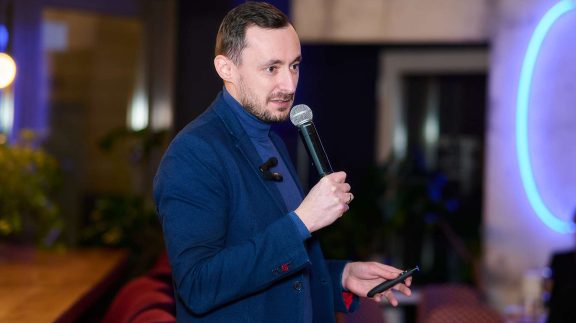
This was the focus of an online u.comms club meeting with Ulіana Pcholkina, a public advocate, leader of the NGO Active Rehabilitation Group, and Chair of the Board of the League of the Strong.
Where accessibility begins
Accessibility means equal opportunities for people to access information, use services, study, work, and participate in society.
Barriers for people with disabilities can be visible or hidden. Visible barriers include inaccessible buildings and services, a lack of sign language content, inaccessible digital services, or limited access to education. Hidden barriers are linked to stereotypes, discrimination, prejudice, and judgment. They often shape how a person is perceived before they even have an opportunity to demonstrate their abilities.
For brands, this means that accessibility should be considered more broadly than physical access. It is important to look at the entire experience of interacting with an organization, from the first piece of communication to using its products or services.
Myths about people with disabilities
During the meeting, Ulіana Pcholkina addressed common perceptions that contribute to the stigma surrounding disability.
These include:
- people with disabilities are somehow “different” from everyone else;
- a person with a disability should be seen as an inspiration or role model;
- a person with a disability is a burden on their family, society, or the state;
- disability is an abnormal condition that needs to be “fixed”;
- a person with a disability poses a threat;
- people with disabilities are “saints” who should never be refused anything.
The problem with these perceptions is that they reduce a person to their disability and create additional social barriers.
According to Ulіana Pcholkina, judgment and prejudice are among the most significant barriers. They can influence how people with disabilities are perceived at work, in the media, in public spaces, or when accessing services.
How to talk about disability appropriately
Using appropriate terminology is an important part of inclusive communication.
Terms and phrases such as “invalid,” “person with limited abilities,” “person with special needs,” or “handicapped” should be avoided.
The appropriate term is “person with a disability”. Depending on the context, “person,” “woman,” “man,” or “child with a disability” can also be used.
This reflects a basic principle: the person should remain at the center, rather than their health condition, diagnosis, or status.
What does this mean for brands?
Inclusive communication requires more than using the right terminology. It also means reviewing how a brand creates content, products, and services.
Practical steps include:
- using simple and clear language;
- adding text descriptions to images;
- using subtitles and accessible video formats;
- ensuring websites and digital services are accessible;
- checking the physical accessibility of spaces;
- avoiding stereotypical representations of people with disabilities in advertising and content;
- involving representatives of different communities in developing communications and products.
It is also important not to create communications about people with disabilities without involving them. The best understanding of barriers comes from including people who have relevant lived experience in the process.
Accessibility as an everyday practice
For a brand, accessibility should not be limited to a single campaign or communication around a particular awareness date. It is reflected in everyday decisions: how a text is written, how a website works, whether a service can be accessed, who the brand represents in its materials, and how it talks about different experiences.
The first step is to understand your audience and identify the barriers they may encounter when interacting with your brand. The next is to consistently remove those barriers from your communications, services, and environment.
The meeting also highlighted that appropriate communication requires continuous learning and a willingness to reconsider familiar expressions. Ultimately, accessibility starts not with a ramp, but with treating the person as a person.